
Interview: Between Disruption and Renewal: Rethinking the Climate Movement in a Time of Democratic Stress
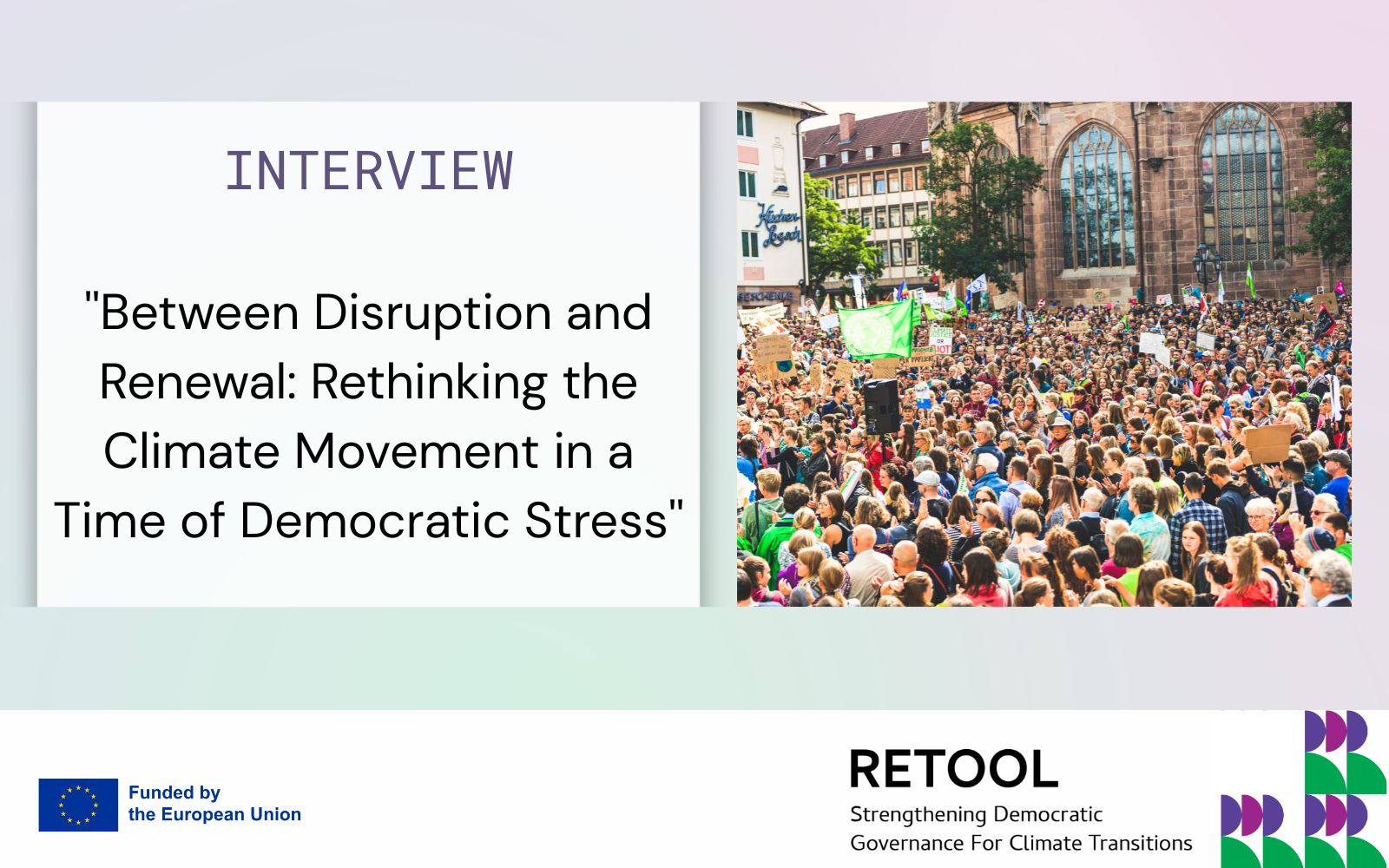
Our consortium partner Dr. Áron Buzogány gave an interview with Dr. Liz Hicks ''Between Disruption and Renewal: Rethinking the Climate Movement in a Time of Democratic Stress''
They argue that while the movement's peak visibility around the 2019 "Global Week for Future" has passed, it is now navigating a complex landscape defined by democratic stress, shifting tactics and the search for renewal.
Key Shifts and Challenges
The experts identify several critical trends reshaping activism since 2019:
The movement faces significant "pushback" including restrictive protest laws, the criminalization of activism and the framing of climate groups as security threats.
The rise of nativist, far-right parties, which often weaponize climate policy in culture wars, has shifted the political center and placed climate action on the back foot.
- The movement contends with an intense issue-attention cycle, where crises like COVID-19, war and conflict have crowded public and media space. Simultaneously, the immense complexity of implementing systemic change has become more apparent.
A Broader Democratic Crisis
Activism that operates outside controlled channels is seen as an aberration rather than a core democratic tradition. Dr. Buzogány adds that existing democratic bargaining systems were not designed to incorporate a new, disruptive conflict like climate change, leading to institutional resistance.
Media, Morale, and Strategic Pivots
While quality media often remained sympathetic, the turn to disruptive tactics triggered intense demonization in tabloid and far-right media, which often focuses on hating the activists rather than outright climate denial. In response, the movement is diversifying and adapting. There is an ongoing, vital internal debate between strategies of institutional engagement and more radical, disruptive action.
The Alliance-Building Dilemma
A central tension lies in alliance-building. The climate crisis inherently intersects with issues of justice, imperialism and inequality, leading to natural alliances with Indigenous, land rights, and anti-imperial movements (e.g., solidarity with Gaza). However, Dr. Buzogány argues that conflating climate action with a broad spectrum of other causes can risk alienating potential allies and diluting the core message, suggesting a need for strategic focus.
Conclusion: A Movement in Transition
The interview concludes that the climate movement is entering a phase of necessary and dynamic diversification. The path forward is not about a single tactic but about navigating contradictions, building context-sensitive alliances, and persistently pushing for change within a strained democratic sphere.


