
COP31 side event: Democratic Governance for Climate Action: Global Innovations in Practice
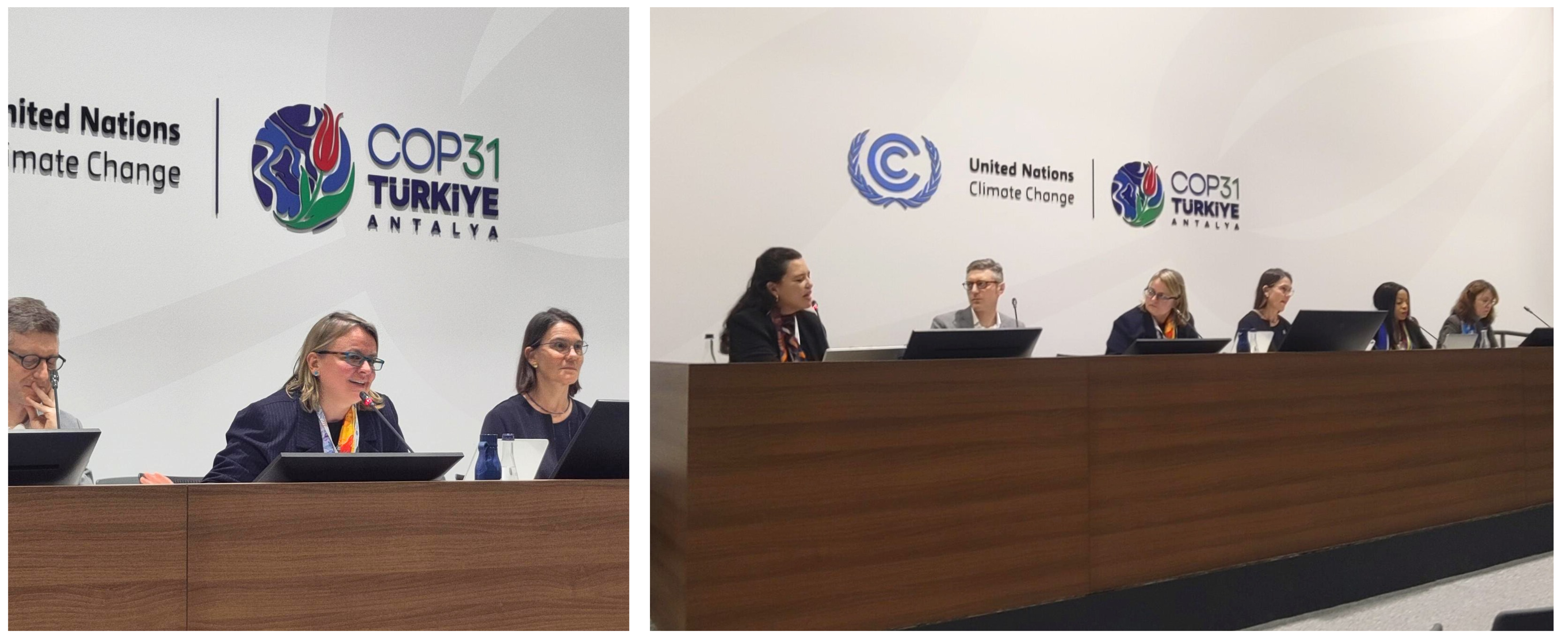
On Monday 16 November, the Grantham Research Institute at LSE, International IDEA and the Real Instituto Elcano held the side event Democratic Governance for Climate Action: Global Innovations in Practice at COP31 in Antalya. Researchers and policymakers came together to discuss the twin challenges of climate action and democratic governance.
The starting point was that climate action depends on democratic institutions that can sustain policy over time, hold governments to their commitments and keep citizens informed and engaged. Those institutions are under strain. Short electoral cycles work against long-term climate goals, international commitments are not always turned into accountable national action, and the information environment behind public debate is increasingly contested.
Accountable national action
The first theme was how international commitments can become credible, accountable national implementation. Research from the Grantham Research Institute shows that climate framework laws, now adopted by over 70 countries, can help. Studies of Chile, Germany, Ireland and New Zealand found that these laws strengthened political focus on climate and had a positive effect on governance, including coordination and accountability. They cannot replace sustained political will, and many do not sufficiently provide for public participation. Speakers from South Africa’s Presidential Climate Commission, the Institute for Climate and Society in Brazil and Germany’s BMZ shared experiences from their own contexts.
The discussion also drew on RETOOL work that tts review of 121 studies finds that the impact of citizens’ assemblies depends on strong political coupling and commitment, effective communication and a clear purpose. Independent expert advisory bodies can complement them by tracking progress and giving stakeholders a way to hold governments to account.
Institutions for future generations
The second theme was how democratic systems can give long-term climate and intergenerational concerns a durable place in decision-making. The session drew on the 2026 International IDEA report Institutional Innovations for Future Generations: The Experience of Climate Change, co-written with the Grantham Research Institute. It concludes that constitutional safeguards, future-oriented parliamentary procedures, independent oversight, scientific expertise and public participation need to work together.
Climate disinformation
The third theme was how false and misleading narratives, including AI-enabled ones, affect public debate and climate policy. Evidence from Iberifier+, based on more than 770 climate debunks by fact-checkers in Spain between 2021 and 2026, shows a shift from “old” disinformation, such as denying climate change, to “new” forms that target climate solutions, policies and technologies, as well as policymakers and activists.
Thank you to our speakers Birgit Pickel, Boitumelo Molete, Marina Caetano, Michele Poletto and Lara Lázaro Touza, to our RETOOL partner Alina Averchenkova, and to everyone who joined us.
Watch the event on Youtube: https://www.youtube.com/watch?v=Y8DOP9-h5U8


